Contents
Questo articolo è disponibile anche in:

Bullfighting in Spain is a tradition that has its roots in ancient Mediterranean practices, where the bull was a symbol of strength and fertility. Rituals involving bulls were already celebrated in ancient times, but bullfighting as we know it today originated in 18th-century Spain. Initially reserved for the aristocracy, the challenge took place on horseback and was a test of courage and skill. Over time, the practice morphed into “bullfighting on foot,” where the matador becomes the protagonist and the spectacle opens up to popular audiences. This tradition spread to various parts of the world, such as France, Portugal and South America, keeping the central idea but adapting with local variations.
Understanding the origins of bullfighting also means grasping its deep connection with village life, where corridas were major social events. Even today, history and tradition give bullfighting a cultural value that transcends mere spectacle, intertwining with Spain’s collective memory and national identity.
The three acts of the corrida: a codified ritual
Bullfighting in Spain follows a strict structure, divided into three main acts, each with specific roles and functions.
The first act is the tercio de varas (the act of the lances), when the bull enters the arena and the picador (a horse-mounted lancer) intervenes. His task is to test the bull’s strength, bravery, and aggression with precise thrusts of the lance, preparing the animal for the later stages. The bull used in these events is always the Toro Bravo, a breed selected for its aggressive temperament, stamina, and vigor, essential traits for the corrida.
The second act is the tercio de banderillas (the act of the banderillas), in which the banderilleros (the matador’s assistants) skillfully plant brightly colored barbed sticks, about 70 cm long, into the bull’s shoulders. This has both a technical function – stimulating the animal – and a dramatic one, intensifying the spectacle’s theatricality and tension.
The final act is the tercio de muerte (the act of death), where the matador (main bullfighter) faces the bull alone, using the muleta (red cloth) and the sword. Here, the matador must demonstrate technique, precision, and strategy, bringing the ritual to a close with elegance and control.
Each stage of the corrida is governed by strict rules ensuring safety and fairness, and every role is crucial to the performance’s success. This codified structure makes bullfighting a complex and fascinating experience, blending skill, courage, and tension into an intense spectacle for the audience.
Participation and dates: where and when to experience bullfighting
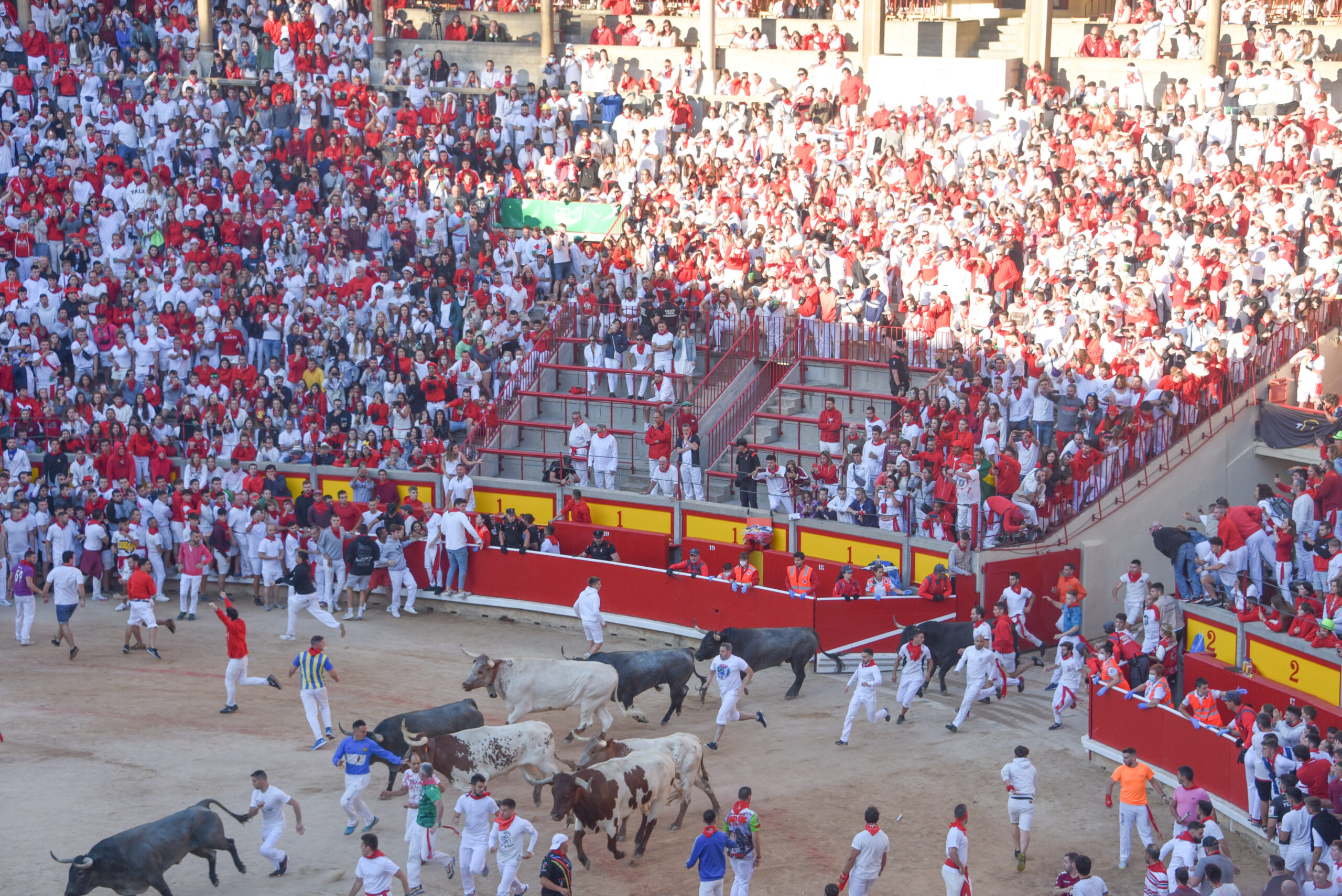
Bullrings are central to Spanish bullfightingas symbols of history and culture. Among the most famous are Madrid’s Plaza de Toros, Seville’s La Maestranza, the Plaza de Toros of Valencia, and Málaga. Capacities range from 5,000 to 25,000 spectators, with peak attendance during traditional events such as San Isidro in Madrid (May 15) and Seville’s April Fair. Pamplona also plays a special role, world-renowned for the San Fermín Festival (July 6–14), which attracts thousands each year for its legendary bull runs and city bullfights. During the festival, the encierro takes place each morning: bulls are released through the city streets on their way to the bullring, as participants run ahead of them.
Each year, millions of tourists and enthusiasts attend corridas, generating a significant economic impact for host cities through ticket sales, accommodations, and related services.
The meaning of bullfighting
The bull, the undisputed protagonist, embodies values such as strength, nobility, and the raw power of nature, while the matador symbolizes discipline, skill, and bravery. Their duel becomes a metaphor for the clash between instinct and control, primal energy and precision. Writers like Ernest Hemingway described bullfighting as an art form, able to capture the tension between man and nature. 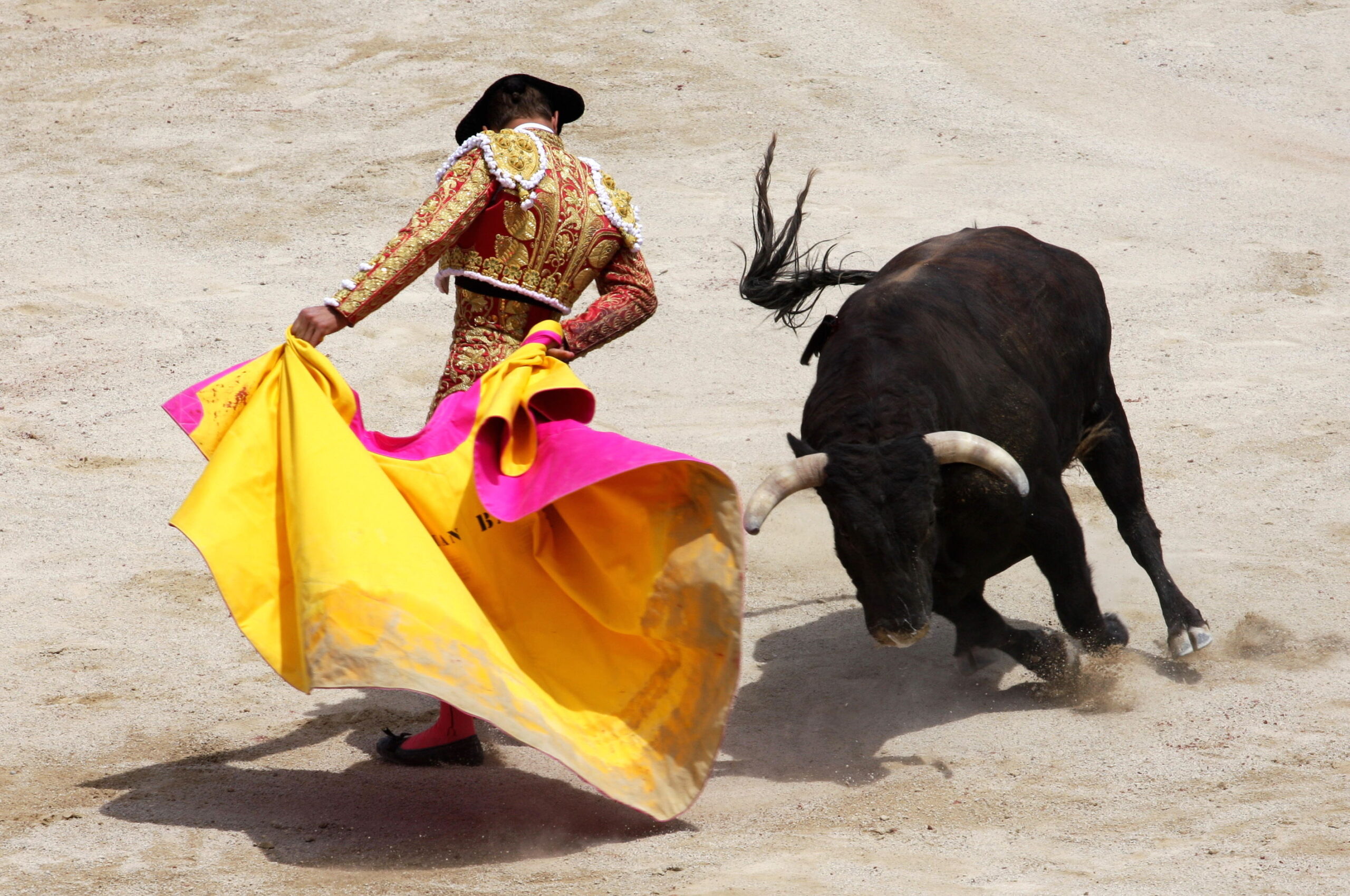
Historically, bullfighting has helped shape the image of Spain– and of other Mediterranean and Latin American countries – around the world. Historic arenas, Toro Bravo breeding farms, and bullfighting schools testify to knowledge passed down through generations. Local bull festivals reinforce the bond between tradition, territory, and popular participation. In this sense, bullfighting represents culture, identity, and historical memory, even amid the controversies surrounding it.
Controversy and the future of bullfighting
In Spain, bullfighting remains at the heart of heated ethical debate, dividing defenders of tradition from animal rights advocates. Critics point to the suffering of bulls and the morality of the spectacle, while supporters highlight its cultural, historical, and economic importance. Some regions, such as Catalonia, have banned bullfighting, while others protect it as cultural heritage. In recent years, “eco-corridas” have emerged—modified spectacles designed to minimize animal suffering—representing an attempt to reconcile animal welfare with the preservation of tradition.
The future of bullfighting seems to depend on the ability to combine culture, innovation and animal protection while preserving the ritual essence of the spectacle. Understanding these dynamics allows us to read bullfighting not only as a controversial phenomenon, but as an evolving cultural heritage, a symbol of a Spain that knows how to confront its roots without ignoring contemporary challenges.