Contents
Questo articolo è disponibile anche in:

Carthage, on the northeastern coast of Tunisia, overlooks the Mediterranean Sea as one of the most extraordinary witnesses of the ancient world. Founded in the 9th century BC by Phoenician settlers from Tyre, it quickly grew into a powerful and influential city. Thanks to its strategic position, Carthage controlled major trade routes linking Europe, Africa, and Asia, becoming a leading economic and military center.
Today, the archaeological site of Carthage stands as a symbol of the ancient Mediterranean, where history, myth, and archaeology intertwine in a narrative that continues to attract scholars and visitors from all over the world.
Foundation and rise of a Phoenician power
The origins of Carthage are linked to the myth of Dido, the Phoenician princess who, according to tradition, left Tyre with a group of refugees to found a new city on the African coast. Her story, recounted in theAeneid by Virgil, speaks of courage and determination—qualities that perfectly reflect the spirit of the Phoenicians, skilled merchants and navigators.
But this is not just a matter of myth. Archaeological research confirms that it was established as a Phoenician colony, inheriting a strong maritime and commercial tradition. From its early years, the city stood out for its artificial harbor, one of the most sophisticated in antiquity. IIt was made up of two separate basins: one for merchant ships and another, more protected, for the war fleet. An infrastructure that reveals the Carthaginians’high level of naval and urban engineering, capable of ensuring both defense and trade.
From here, the city extended its control far beyond the Tunisian coast. It founded colonies and military bases across North Africa, on Mediterranean islands such as Sicily and Sardinia, and as far as the rich regions of present-day Spain. In a short time, Carthage became a true maritime empire, ruled by a merchant oligarchy that encouraged trade, culture, and innovation.
The clash with Rome and the Punic Wars.
Carthage’s destiny became inseparable from that of Rome in one of antiquity’s most famous rivalries: the Punic Wars. Between 264 and 146 BC, the two empires clashed in three wars that marked the control of the western Mediterranean, involving millions of people and forever changing the political balance of the region.
The most celebrated figure of this era is General Hannibal Barca. During the Second Punic War, he led his army across the Alps, bringing with him war elephants. He managed to surprise Rome and inflict some of its most devastating defeats, such as at Cannae in 216 BC. Despite these victories, Carthage was unable to maintain the upper hand. Rome, with greater resources and a broader strategy, eventually prevailed.
The Third Punic War, ending in 146 BC, marked the end of Carthage’s independence. The city was destroyed, but a few decades later the Romans rebuilt it, transforming it into a major administrative and cultural center of Roman Africa. In this new role, Carthage remained an important hub, though under the rule of a different empire.
The archaeological heritage of Carthage
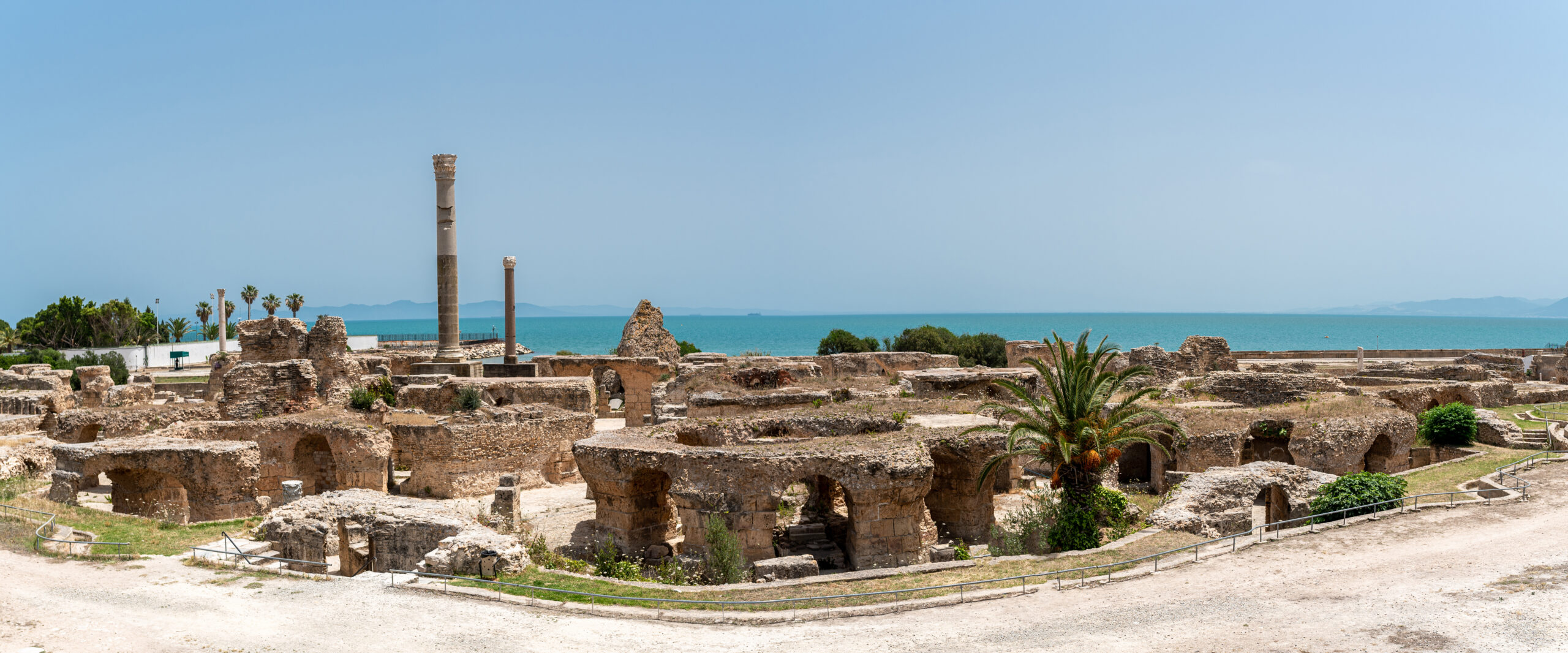
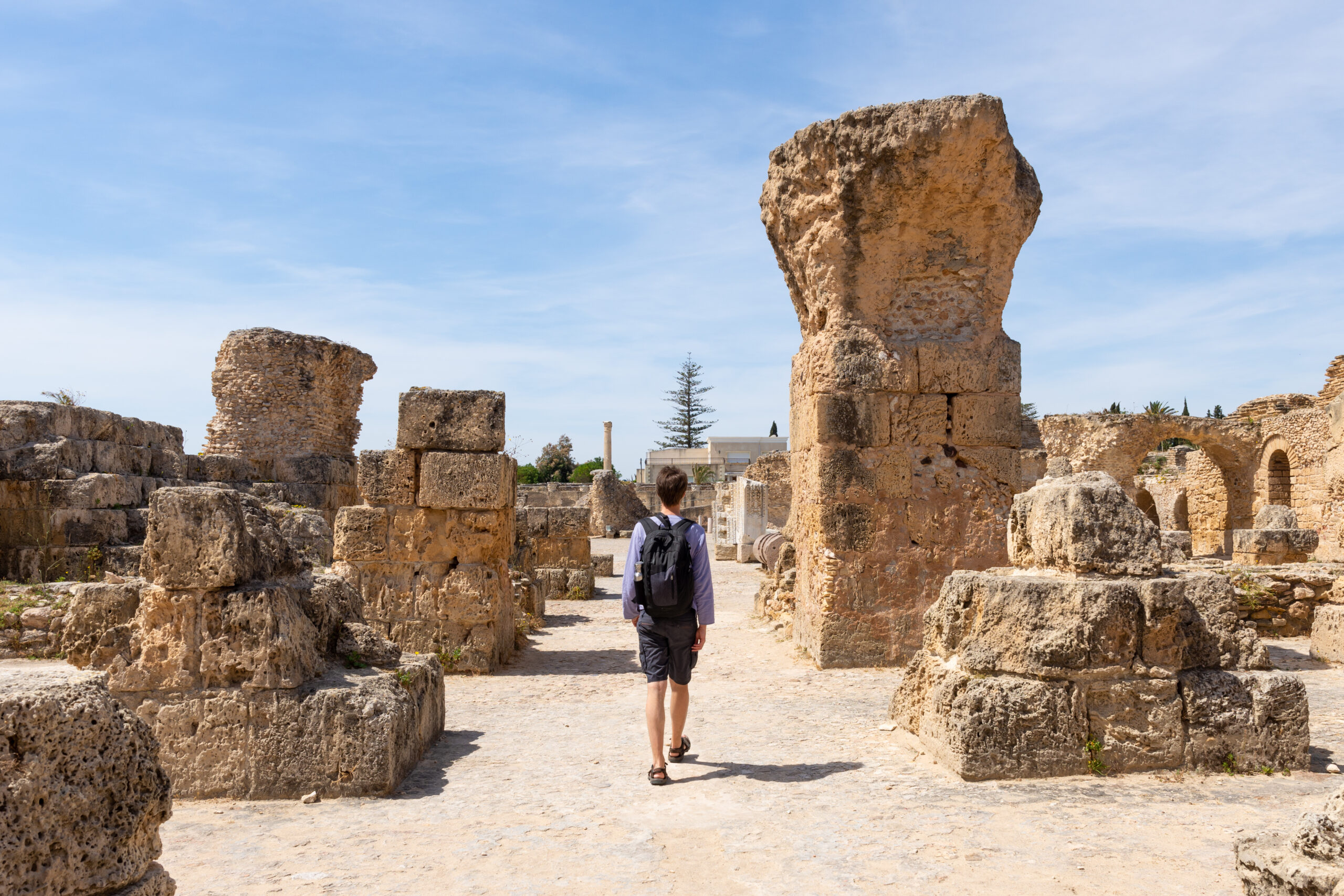
Today, Carthage is an archaeological site rich in artifacts and structures that tell the story of a civilization that was able to innovate and influence the entire Mediterranean. The Punic harbor, with its circular basins, remains a masterpiece of ancient naval engineering and shows how Carthage could manage military and commercial activity with remarkable efficiency.
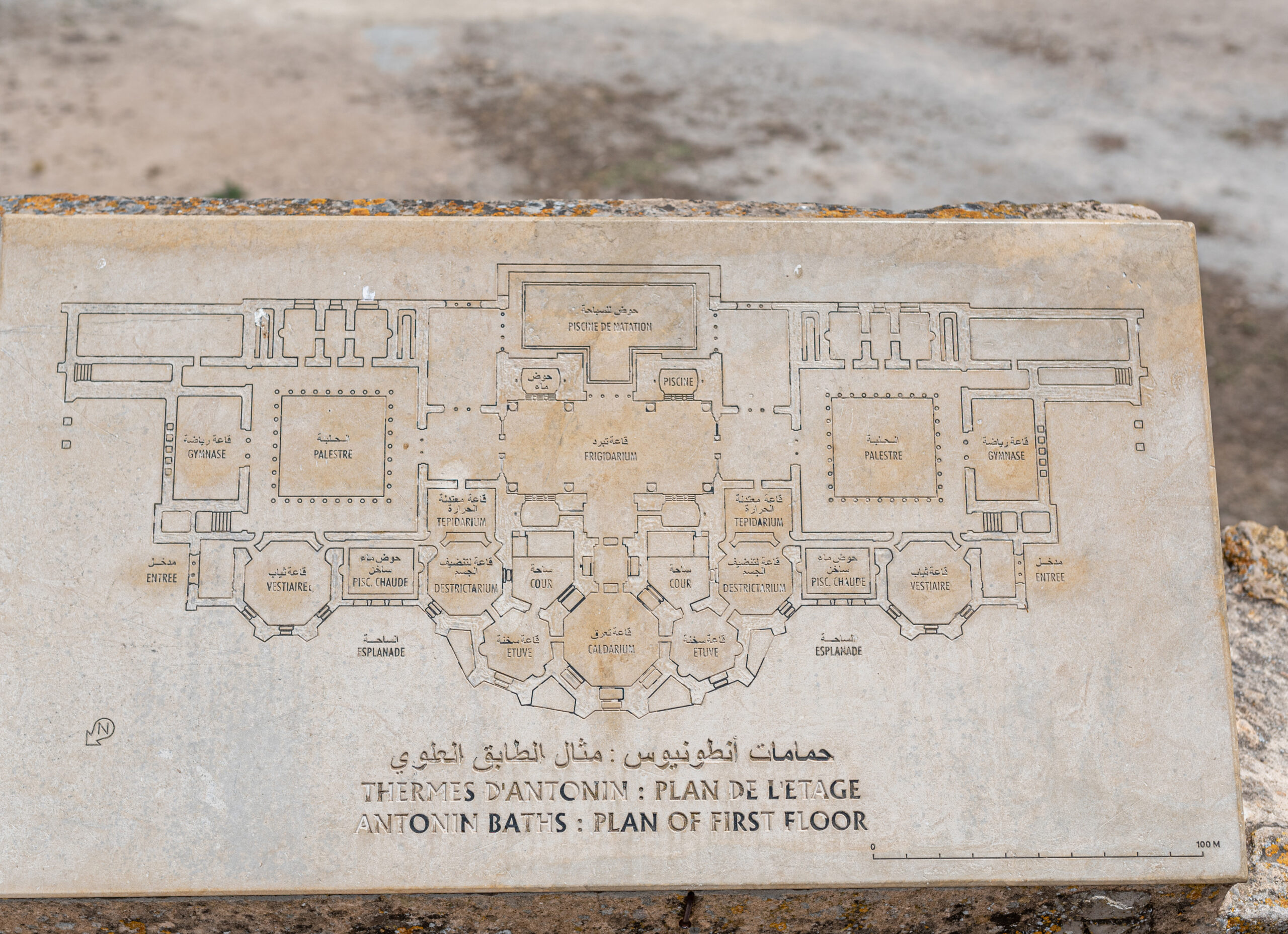
The Baths of Antoninus, built in the Roman period, are among the largest ever discovered and offer a vivid picture of public life and leisure in Roman Carthage.. Next to them, the amphitheater and theater tell of the social and spectacular dimensions of the city, while the vast cisterns of La Malga testify to the efficiency of Roman water infrastructure. Byrsa Hill, the heart of ancient Carthage, preserves remains of dwellings, temples and fortifications, as well as the famous St. Louis Cathedral built in more recent times. Temples dedicated to Baal Hammon and Tanit, central deities of Carthaginian religion, reflect the close link between religion and political power.
The necropolises with their tumulus tombs and Phoenician inscriptions, are invaluable sources for understanding funerary customs and material culture. The National Museum of Carthage completes the experience with its collection of mosaics, ceramics, jewelry, and everyday objects, opening a window onto the daily life of the city’s ancient inhabitants.
Carthage today: culture, tourism and memory
Today, Carthage is a meeting place between past and present. Every year, thousands of visitors explore its ruins, museums, and take part in cultural events that highlight its historical legacy. Festivals, exhibitions, and conferences help keep the memory of this ancient civilization alive, making Carthage an essential destination for anyone wishing to understand the roots of the Mediterranean.
Its proximity to Tunis, the capital of Tunisia, facilitates access to this heritage, which is part of an itinerary rich in history, nature and Mediterranean culture. Carthage thus represents a bridge between different eras, a place where the past continues to speak and inspire anyone who is willing to listen.