Account
Tuesday, November 18, 2025
Il Nuovo Mediterraneo
  • Home
  • Work with us
  • Mediterranean countries
    • Europe
    • Africa
    • Asia
  • AI Presenters
  • Overseas
  • Italian
No Result
View All Result
Il Nuovo Mediterraneo
  • Home
  • Work with us
  • Mediterranean countries
    • Europe
    • Africa
    • Asia
  • AI Presenters
  • Overseas
  • Italian
No Result
View All Result
Il Nuovo Mediterraneo

Scylla and Charybdis: the myth that still enchants the Strait of Messina

Fabiana Chillemi by Fabiana Chillemi
29 September 2025
in current events, Customs and Traditions, Europe, News
Reading Time: 4 mins read
A A
Stretto di Messina

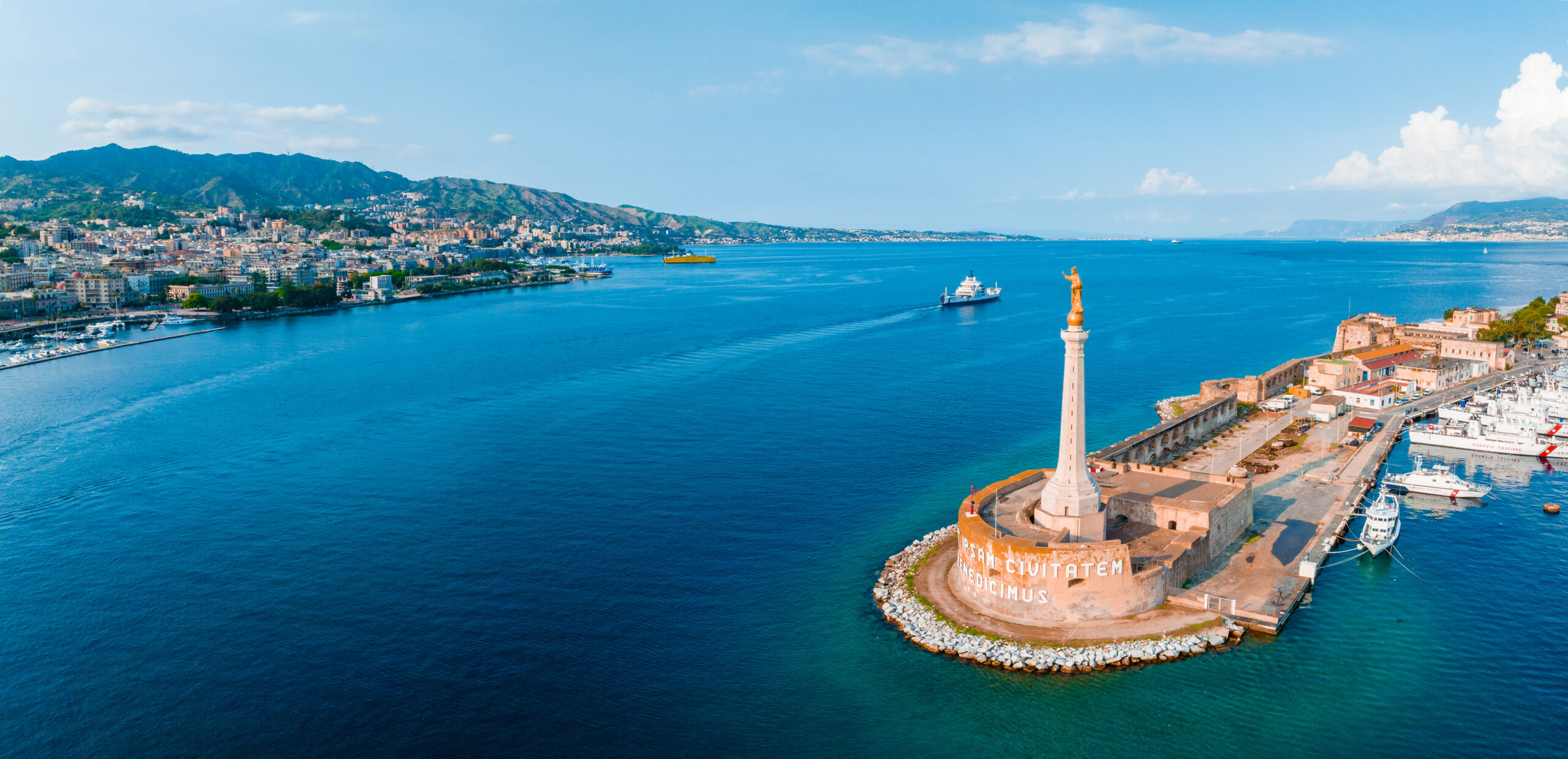
Messina, Sicily, Italy, August 20, 2022. View of the Messina's port with the gold Madonna della Lettera statue

Contents

  • The mythical heart of the Strait of Messina
  • A myth born to explain nature
  • Echoes in literature: from Homer to Dante
  • A legend and folk heritage that still lives on

Questo articolo è disponibile anche in: Italian

Where Sicily and Calabria almost touch, the Strait of Messina has always inspired stories, legends and folk tales. Among the most fascinating is that of Scylla and Charybdis, two monstrous sea creatures that, according to mythology, have terrified sailors crossing these waters since ancient times .

The mythical heart of the Strait of Messina

According to Greek mythology, Scylla was a beautiful young woman who was courted by several sea gods, including Poseidon, Minos of Crete, and the sea god Glaucus. Near the rocks of Zancle (the ancient name for Messina), Scylla meets Glaucus, a fisherman transformed into a sea god, half man and half fish.

Scylla, frightened by his appearance, fled. Glaucus, in despair, turned to the sorceress Circe, asking her for a potion that could make him human again. But Circe, secretly in love with him and consumed by jealousy, took revenge by transforming Scylla into a sea monster. From that moment on, the young woman took on the form of a creature with six canine heads and twelve tentacled legs. She hid among the rocks on the Calabrian side of the Strait, ready to attack anyone who dared to pass nearby.
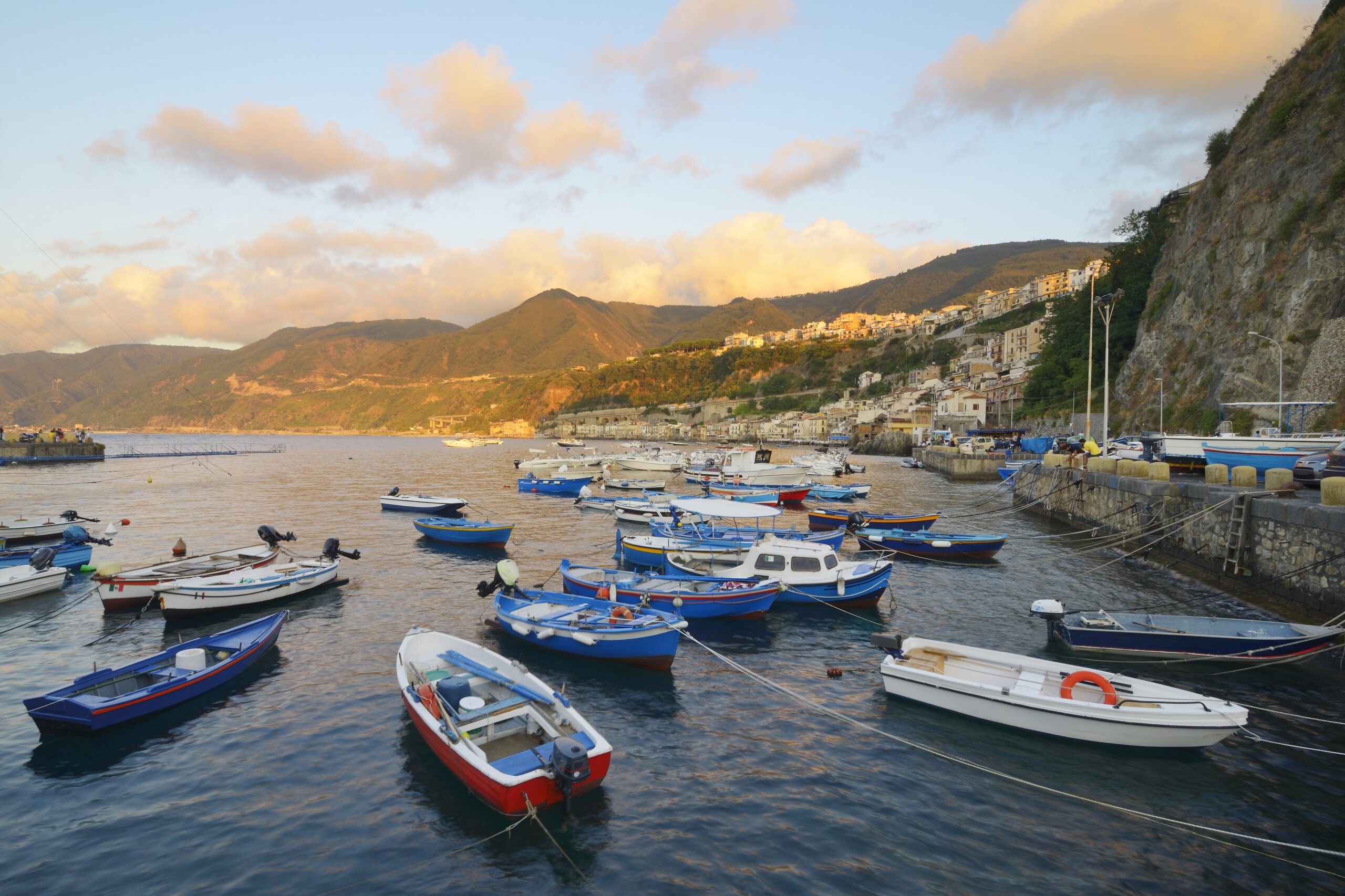
Scilla, Calabria.
Scilla, Calabria.

Charybdis, on the other hand, was the daughter of Poseidon and Gaea. After stealing Heracles‘ sacred livestock, she was punished by Zeus, who condemned her to become a water-devouring sea monster. Three times a day she swallows the sea and throws it back violently, creating giant whirlpools capable of dragging down even the strongest ships. According to legend, Charybdis hid along the Sicilian shore of the Strait, near present-day Ganzirri, north of Messina.

A myth born to explain nature

Today we read this legend as a captivating tale, but it most likely arose as an attempt to explain real natural phenomena that were extremely dangerous. The Strait of Messina unique in its morphology: narrow, deep, and subject to tidal currents that change direction several times a day. Here the waters of the Ionian and Tyrrhenian Sea meet, generating turbulent motions, whirlpools and sudden changes in sea level.

For ancient peoples, these phenomena were inexplicable. Without scientific instruments, myth became the way to give a face and meaning to the sea’s dangers.. The whirlpools that still form north of Messina may have inspired the character of Charybdis, while Scylla’s treacherous cliffs fit the image of the many-headed monster lying in wait.

Navigating the Straits, especially in ancient times, was a perilous task. Oared or sailing vessels required great skill to steer; a single mistake could dash them against the rocks or drag them into the vortex. Thus, the myth of Scylla and Charybdis thus became a kind of imaginary map of dangers, combining natural elements with a strong and enduring narrative.
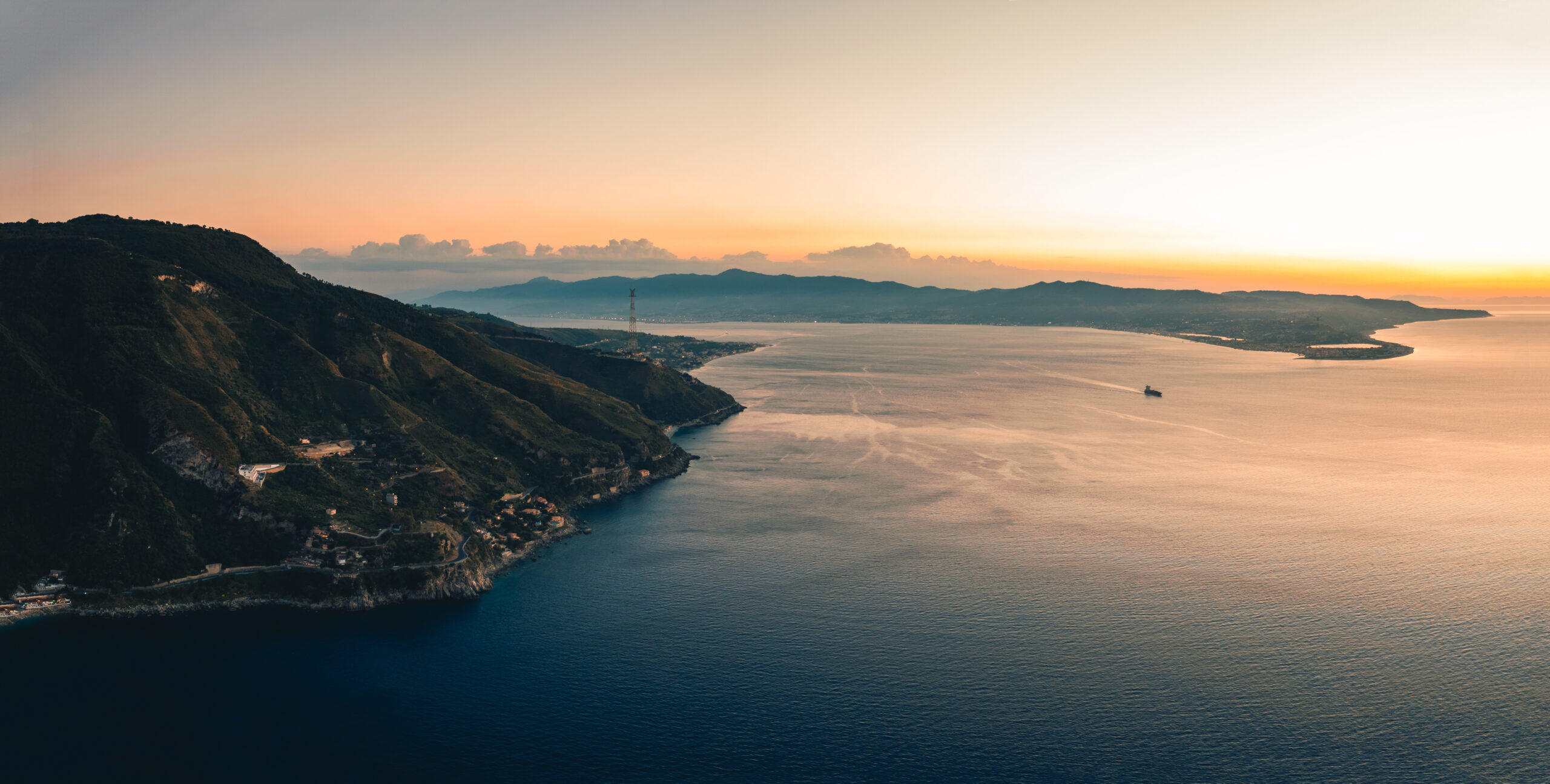
Stretto di Messina.
Stretto di Messina.

Echoes in literature: from Homer to Dante

The first author to tell the myth of Scylla and Charybdis was Homer, in theOdyssey. During his journey home to Ithaca, Odysseus was forced to choose between the two monsters. He ultimately steered closer to Scylla, sacrificing six of his men, rather than risk the deadly whirlpools of Charybdis that could destroy his entire ship. It is one of the most dramatic episodes in the poem, showing how deeply the myth was embedded in Greek culture.

Virgil also revisits the legend in the Aeneid. As the Trojan hero Aeneas flees his burning city, he crosses the Strait and is warned of the perils embodied by the two sea creatures.

In the Middle Ages, Dante Alighieri mentions Scylla and Charybdis in the Divine Comedy, turning them into moral symbols: allegories of sins and temptations from which it is difficult to save oneself.

Even today, the expression “being between Scylla and Charybdis” is used to describe situations in which every choice involves loss or risk but, beyond metaphor, the legend retains its value and reminds us of the dangers of the sea and the skill needed to deal with them.

A legend and folk heritage that still lives on

The myth of Scylla and Charybdis is not confined to schoolbooks or classical studies but continues to live in popular culture, oral tales, local traditions and even tourism.

In Scylla, the picturesque village of Chianalea overlooks the sea, at the very spot where, according to legend, the creature hides. The houses built on the rocks and the sound of the waves are a reminder, on stormy days, of the eerie power of the sea.

On the Sicilian side, in the Ganzirri area, local fishermen are familiar with the currents and eddies that form with the changing tide. Although today no one believes in sea monsters anymore, the legend continues to be told to children, especially in fishing families. It is a way of teaching respect for the sea, but also to keep alive a collective memory linked to a unique territory. In addition, Messina’s Neptune Fountain in the Piazza dell’Unità d’Italia depicts the two sea monsters Scylla and Charybdis chained on either side of Neptune and is an allegory of the city’s physical and moral strength in overcoming adversity.

In recent years, the myth has been rediscovered in terms of tourism: thematic routes, guided boat tours, theater performances and art installations inspired by the two monsters have been created. In Messina and Scylla there are murals, explanatory panels and even summer events dedicated to the legend. The tale of Scylla and Charybdis thus continues to weave together myth, nature and local identity, still enchanting those who cross the Strait today.


Stay up to date by following us on Facebook and Instagram.

Aggiungi ai Preferiti
Please login to bookmark Close

You might also like

Encierros di San Fermín a Pamplona, Spagna

Bullfighting: the ritual of the bull that reflects Spain’s history

27 October 2025
Torero e toro durante una corrida.

The tradition of bullfighting: history, evolution, and debate

29 September 2025
Abbazia di San Filippo, Agira, Enna. Foto di Salvatore Farina, via Wikimedia Commons.

The Cult of Saint Philip and the Pilgrimage of Aidone

27 October 2025

No account yet? Register

Tags: ancient mythsCalabriacultural tourismdangerous navigationDante AlighieriDivine Comedyfolk traditionsGanzirrihamlet of ChianaleaHomerlegends of the sealocal folkloreMediterranean mythmitologia grecamoral symbolsmyth and naturemythological narrativeMythologyOdysseyreelsScylla and Charybdissea monsterssea mythsSicilyStrait currentsStrait of Messinathematic pathstidal currents
ShareTweetSendShare
Previous Post

Carthage: challenged Rome and still captivates the Mediterranean

Next Post

The Cult of Saint Philip and the Pilgrimage of Aidone

Fabiana Chillemi

Fabiana Chillemi

Recommended For You

Tirana and Alexandria: Mediterranean Capitals culture 2025

by Fabiana Chillemi
27 October 2025
0
Tirana, Capitale Mediterranea della Cultura e del dialogo.

In 2025, Tirana and Alexandria have been named the first Mediterranean Capitals of Culture and Dialogue, a title created by the Union for the Mediterranean (UfM) in partnership...

Read moreDetails

Bullfighting: the ritual of the bull that reflects Spain’s history

by Fabiana Chillemi
27 October 2025
0
Encierros di San Fermín a Pamplona, Spagna

Bullfighting in Spain is a tradition that has its roots in ancient Mediterranean practices, where the bull was a symbol of strength and fertility. Rituals involving bulls were...

Read moreDetails

The tradition of bullfighting: history, evolution, and debate

by Fabiana Chillemi
29 September 2025
0
Torero e toro durante una corrida.

The corrida is one of the most eagerly awaited and controversial spectacles. Deeply rooted in history and popular traditions, it reflects centuries of culture, rituals and social practices....

Read moreDetails

The St. Paul trail in Turkey: 500 km in the footsteps of the apostle

by Fabiana Chillemi
27 October 2025
0
San Paolo, Turchia.

Religious paths have attracted more and more travelers in recent decades. The Way of St. James or the Via Francigena are now famous, but they are not the...

Read moreDetails

The Cult of Saint Philip and the Pilgrimage of Aidone

by Fabiana Chillemi
27 October 2025
0
Abbazia di San Filippo, Agira, Enna. Foto di Salvatore Farina, via Wikimedia Commons.

In the Sicilian hinterland, among forests, hills and ancient paths, the Cammino di San Filippo is walked, an itinerary that interweaves spirituality and unspoiled landscapes. The pilgrimage, now...

Read moreDetails
Load More
Next Post
Abbazia di San Filippo, Agira, Enna. Foto di Salvatore Farina, via Wikimedia Commons.

The Cult of Saint Philip and the Pilgrimage of Aidone

Related News

Oscars 2024, best foreign film: Italy and Spain nominated

Oscars 2024, best foreign film: Italy and Spain nominated

24 April 2024
yanartas

Yanartaş: the ever-burning home of the Chimera

24 April 2024
Tirana, Capitale Mediterranea della Cultura e del dialogo.

Tirana and Alexandria: Mediterranean Capitals culture 2025

27 October 2025

Browse by Category

  • Africa
  • AI presenters
  • Art
  • Asia
  • Cinema
  • cooking
  • current events
  • Customs and Traditions
  • Education
  • Europe
  • Excellent People
  • Green
  • History
  • Italian for foreign learners
  • Lifestyle
  • Literature
  • Mediterranean countries
  • News
  • Non categorizzato
  • Overseas
  • Pop Culture
  • Presentatori AI
  • Travel

The cultural observatory on the 22 countries on the Mediterranean Sea.

Contact:
info@ilnuovomediterraneo.com

Editorial Board:
press@inm.news

Follow us

Aree del Mondo

  • Mediterranean countries
  • Mediterranean countries
  • Europe
  • Africa
  • Africa
  • Asia
  • Asia
  • Europe
  • Overseas
  • Overseas

Categorie

  • Africa
  • AI presenters
  • Art
  • Asia
  • Cinema
  • cooking
  • current events
  • Customs and Traditions
  • Education
  • Europe
  • Excellent People
  • Green
  • History
  • Italian for foreign learners
  • Lifestyle
  • Literature
  • Mediterranean countries
  • News
  • Non categorizzato
  • Overseas
  • Pop Culture
  • Presentatori AI
  • Travel

Latest News

Tirana, Capitale Mediterranea della Cultura e del dialogo.

Tirana and Alexandria: Mediterranean Capitals culture 2025

27 October 2025
Encierros di San Fermín a Pamplona, Spagna

Bullfighting: the ritual of the bull that reflects Spain’s history

27 October 2025
Torero e toro durante una corrida.

The tradition of bullfighting: history, evolution, and debate

29 September 2025

© 2023 ilNuovoMediterraneo - Newspaper to be registered.

Welcome Back!

Login to your account below

Forgotten Password? Sign Up

Create New Account!

Fill the forms bellow to register

All fields are required. Log In

Retrieve your password

Please enter your username or email address to reset your password.

Log In

Add New Playlist

No Result
View All Result
  • it Italiano
  • en English
  • Home
  • Home
  • Mediterranean countries
    • Europe
    • Africa
    • Asia
    • Overseas
  • Mediterranean countries
    • Europe
    • Asia
    • Africa
    • Overseas

© 2023 ilNuovoMediterraneo - Testata in attesa di registrazione

Are you sure want to unlock this post?
Unlock left : 0
Are you sure want to cancel subscription?