Contents
Questo articolo è disponibile anche in:

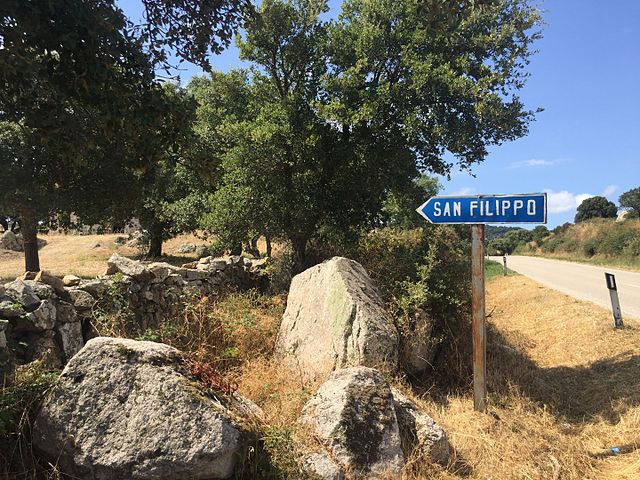
In the Sicilian hinterland, among forests, hills and ancient paths, the Cammino di San Filippo is walked, an itinerary that interweaves spirituality and unspoiled landscapes. The pilgrimage, now officially recognized as one of Sicily’s main religious paths, offers those who walk it an intense experience that combines faith and nature.
The origins of the cult of St. Philip
Saint Philip of Agira, also known as the Black Saint because of the color of his skin, is one of the oldest and most venerated figures in Sicilian Christianity.
According to the Chronicle of Eusebius of Caesarea, Philip, born in Thrace between the fourth and fifth centuries to a Syriac family, was ordained a priest in Rome and sent on a mission to Sicily. There, he settled in Agira, where he remained for more than fifty years, devoting himself to preaching, converting pagans and, above all, exorcisms. Furthermore, he was dedicated on healing the “beguiled,” that is, people struck by mysterious evils, often interpreted as possessions or incurable diseases.
A second version, attributed to Athanasius, who lived in the Syriac world between the seventh and eighth centuries, identifies him as one of the seven deacons chosen by the apostles in the Acts. They were sent to Rome by St. Peter and arrived in Sicily after a shipwreck in Crete. Here too, he settled in Agira and exercised his ministry there for forty years, with a reputation as a powerful healer.
In both versions, Philip is remembered as a thaumaturge saint, able to free people from illness and possession. His relics, hymns, and even the invocation of his name were believed to be effective instruments of protection and healing. A connection with the theme of liberation from physical or spiritual evil continues to characterize his cult to this day.
The cult of St. Philip in Sicily and the Pilgrimage of Aidone
The cult of St. Philip spread rapidly in east-central Sicily. Today St. Philip is worshipped in several municipalities: Agira (where his tomb is preserved), Aci San Filippo, Calatabiano, Limina, Mandanici, Castiglione di Sicilia, Gagliano Castelferrato, and, above all, Aidone, where devotion to him remains particularly strong.
In Aidone, the Way of St. Philip represents the beating heart of devotion. Every year, between late April and early May, hundreds of pilgrims set out from Enna, Piazza Armerina, Valguarnera, Pietraperzia and other towns to walk about 25 to 30 kilometers through country tracks, woods, hills, and extraordinary landscapes.
The Way of St. Philip in Aidone can be completed in a single day or divided into stages. Some walk it barefoot, others in silence, and still others praying or singing, carrying gifts for the saint, photos of sick family members, letters and promises to entrust. This way of experiencing pilgrimage recalls the practices of those who walk the Camino de Santiago de Compostela, another major European spiritual route where walking becomes a gesture of faith, hope and sharing. It is a collective moment of prayer and entrustment, where people ask for help, dissolve a vow or give thanks for a grace received.
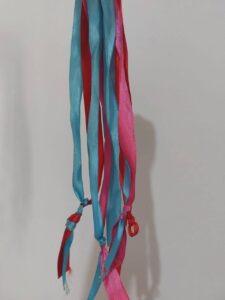
In the past, some pilgrims completed the final stretches on their knees or with chains on their feet, others even crawling their tongues across the floor to the statue of the saint. Today, some symbolic traditions remain alive, such as the offering of “zagarelle,” strips of colored fabric rubbed against the statue or large votive candles.
The St. Philip’s Path has been included in theRegional Atlas of Religious Paths of Sicily, recognized as one of the main paths of faith on the island, capable of combining intangible heritage, nature and spirituality.
The May Celebrations in Aidone
In Aidone, devotion to Saint Philip is not limited to the pilgrimage alone. May is the month of the Saint, with a calendar full of religious and popular events involving the entire community.
Celebrations begin as early as April 28 with moments of prayer and spiritual preparation. On April 30, the evocative procession of the Bellia Crucifix takes place, marking the official opening of the festivities.
May 1 is the most anticipated day: thousands of devotees and visitors crowd into Aidone. The saint is carried in procession amid singing, applause, tears and cries of joy, in an atmosphere that blends sacredness and celebration. The faithful try to touch the image of the Saint, take home votive handkerchiefs and strips as a sign of blessing and protection.
Celebrations continue in the following days with masses, processions, fireworks, and blessings of the fields and the village. The festive cycle ends on June 1, with a final procession.
In conclusion, the cult of St. Philip, the Way, prayers, processions and festivals represent a living and precious heritage for Sicily. On these occasions, the community recognizes and safeguards a richness that is not only cultural and spiritual but also deeply tied to identity. Walking in the Saint’s footsteps means renewing each year a deep connection with one’s land, with the collective memory and with a faith that, while rooted in the past, continues to speak to the present.